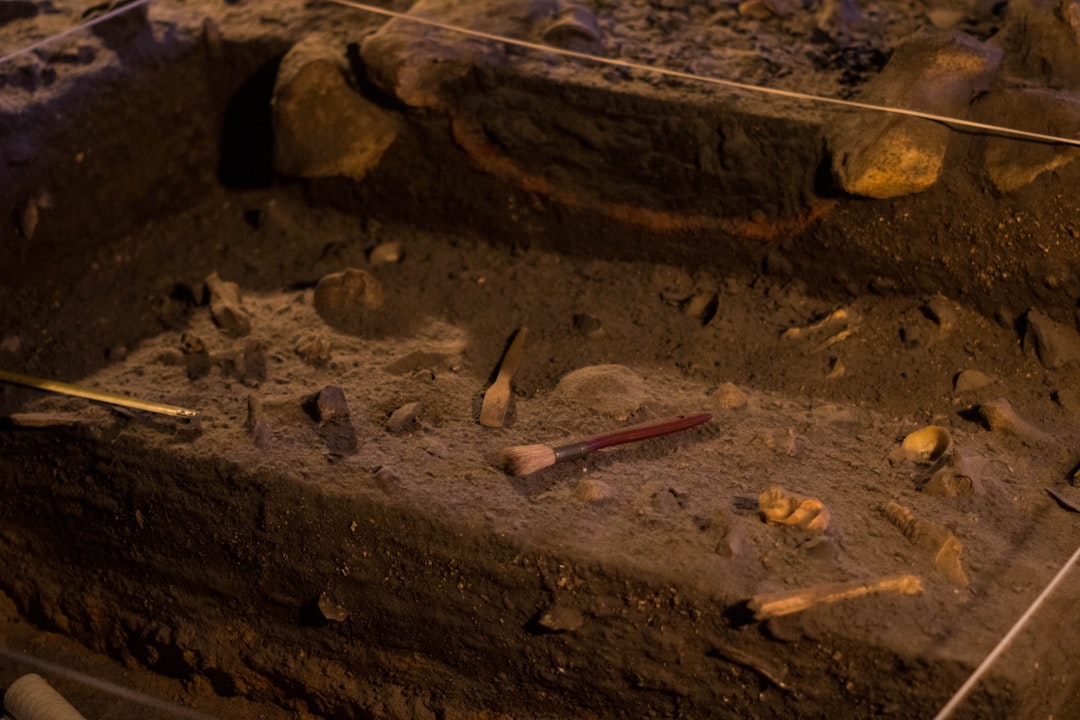
Every corner of the Earth seems to carry a piece of history infused with mystery. Ancient artifacts captured through time can pique curiosity, prompting questions about their creators and purposes. In this journey, we will explore some of the most intriguing unsolved ancient artifacts and the various theories surrounding their origins. As we unravel these mysteries, you will be invited to ponder their significance and entice your curiosity for more.
The Antikythera Mechanism: A Lost Tool of Astronomy
In this video, we delve deeper into the Antikythera Mechanism, exploring its intricate design and the groundbreaking implications it had for ancient astronomy. Discover expert insights and visual illustrations that bring to life the mystery behind this remarkable artifact and its enduring legacy.
Discovered in a shipwreck off the coast of Antikythera, Greece, in 1901, the Antikythera Mechanism has long fascinated historians and scientists alike. This intricate, ancient device is believed to be the world’s first analog computer, dating back to around 150-100 BC.
The mechanism features a collection of gears and dials that were used to predict astronomical events and calendar months. Recent studies have shown that the device may have been used to track the cycles of celestial bodies with remarkable precision, even accounting for leap years. Yet, despite previous research efforts, many questions linger. How did ancient Greeks construct this sophisticated device? What advanced scientific knowledge did they possess to create such a detailed model of the cosmos? Many of these questions remain open to interpretation and debate.
Examining the construction of the Antikythera Mechanism reveals insights into ancient Greek engineering. Historians and physicists have collaborated to recreate how these gears worked, highlighting an impressive understanding of mathematics and astronomy. The intricacies of the gears, with at least 30 distinct components, illustrate a level of sophistication that was thought to be beyond ancient civilizations. In addition to its mechanical complexity, the Antikythera Mechanism invites us to wonder how many similar devices might have existed that we have yet to discover.
You might find it intriguing to compare this innovative tool to the Voynich Manuscript, whose unknown secrets complicate our understanding of historical knowledge. Both artifacts are emblematic of ancient human ingenuity yet remain largely undeciphered, inviting speculation about the collective capabilities of past civilizations.
The Nazca Lines: Geoglyphs of the Desert
Spanning nearly 450 square kilometers in southern Peru, the Nazca Lines are gigantic geoglyphs etched into the desert floor, depicting various animals and shapes visible only from above. Despite their discovery in the 1920s, the lines’ purpose remains elusive. Were these intricate designs astronomical calendars, or did they play a role in religious rituals?
One captivating theory suggests they were created as offerings to the gods, emphasizing how ancient civilizations might have communicated with celestial bodies. Theories abound, proposing connections to water cults, agricultural calendars, or even extra-terrestrial contact. They reflect the enormous efforts ancient Peruvian peoples invested in their relationship with the cosmos – all etched into the ground for only a select few to view.
To truly grasp the magnitude of the Nazca Lines, consider the engineering and planning involved in their creation. Scholars believe that the lines were constructed by carefully removing reddish-brown iron oxide-coated pebbles to expose the lighter soil underneath. This meticulous process would have required a vast workforce and a coordinated effort over decades, if not centuries. Further studies have also suggested they originated as ritual pathways designed for ceremonial practices, expressing the deep spiritual lives of the Nazca culture.
The colossal size and design of the Nazca Lines make them a compelling reminder of humanity’s ancient relationship with nature and divinity. These ancient geoglyphs are not merely markings on a landscape; they are echoes of a civilization’s beliefs and practices, as well as their technological abilities. With improvements in aerial photography and satellite imagery, researchers are continuously discovering additional geoglyphs, hinting at a more extensive network of designs than previously believed.
Stonehenge: A Monument Shrouded in Mystery
Known for its massive stone circles, Stonehenge remains one of the most iconic, yet enigmatic, ancient monuments. Constructed around 2500 BC in England, this prehistoric site has been researched extensively, but its original purpose still eludes scholars.
Some argue it served as an astronomical observatory for tracking the movements of the sun and moon, while others believe it was a sacred site for burial practices. Archaeological investigations have uncovered human remains and cremation remains in nearby barrows, suggesting a possible connection to ancestral worship. These findings highlight how Stonehenge could have been a ceremonial arena for significant social rituals.
A deeper analysis of the stones reveals that they were formed from two types of stone: larger sarsens and smaller bluestones. The bluestones, traced back to a quarry in Wales, pose intriguing questions about transportation methods in ancient times. How did the builders manage to transport such heavy stones over substantial distances without modern machinery? This question of logistics remains a topic of intense debate, further complicating our understanding of prehistoric engineering capabilities.
Theories abound, but none seem to encapsulate the complete essence of this magnificent structure. The community involved in constructing Stonehenge must have coordinated labor and resources, reflecting an advanced societal structure. New technological advances allow researchers to conduct non-invasive sub-surface surveys which continue to unearth new insights into the layout of the site and its surrounding landscape, suggesting that it was part of a larger network of prehistoric monuments. Drawing a parallel with uncoded messages in history, the significance of Stonehenge remains a symbol of unresolved mystery in our collective heritage. The monument continues to draw visitors from around the globe, who come to ponder its origins and meanings.
Baghdad Battery: Powering the Past?
Often referred to as the Baghdad Battery, this artifact consists of a clay jar with a copper cylinder and iron rod inside. Discovered near Baghdad, Iraq, it dates back to around 250 BC, leading to speculation that it may have been used as a primitive galvanic cell for electroplating or therapeutic purposes.
But how does such an ancient object get lumped into debates about ancient technology? Some scholars suggest it could have been used to electroplate gold onto other materials, hinting at a fundamental understanding of electromagnetism long before its mainstream acceptance. While some vehemently reject this idea, others argue this artifact suggests a more complex understanding of electricity by our ancestors than we previously thought.
The ongoing debate over the Baghdad Battery highlights the gaps in our understanding of ancient technology and the potential for undiscovered knowledge. Further studies and experiments attempt to recreate the conditions that would have allowed for electroplating or medicinal use, revealing how ancient peoples might have harnessed natural resources in ways we have yet to fully comprehend. This inquiry reflects a larger curiosity regarding the technological prowess achieved during ancient times, as modern scholars challenge the previous narrative that ancient civilizations lived in an era devoid of such sophisticated knowledge.
The Piri Reis Map: A Cartographer’s Secret
Created in 1513 by the Ottoman admiral and cartographer Piri Reis, this map is remarkable not only for its intricate detail but also for its depiction of parts of the Americas, Antarctica, and other regions that seemed unknown at the time. Early maps focused primarily on European coastal regions or localized trade routes, so the accuracy of the Piri Reis map raises eyebrows regarding ancient maritime navigation and exploration.
What makes the Piri Reis map particularly fascinating is the controversy surrounding its sources; it is said to be a combination of earlier maps lost to history. Some researchers argue that Piri Reis had access to advanced knowledge from earlier civilizations or even maritime explorers who traveled across the globe, which would reshape our understanding of historical geography and exploration. The existence of accurate geographical representations raises eyebrows about ancient maritime navigation and explorers.
The details shown on the map, including large sections of the South American coastline, depict features that would only be accurately surveyed centuries later. Further analysis indicates that parts of the map may even outline landmasses covered by glaciers today, which raises questions about how much ancient civilizations knew about the Earth’s geography. Other maps from the same time period fail to depict the same level of accuracy, suggesting that knowledge was either more widespread than acknowledged or based on ancient sources that have since been lost. The enigma deepens as we reflect on other unresolved mysteries such as the Dyatlov Pass incident, which still incites thorough investigation and discussion.
The Crystal Skulls: Artifacts or Modern Hoaxes?
Crystal skulls have become famous artifacts due to their representation in popular culture, most notably in movies and fiction. However, the reality of these artifacts raises a plethora of questions. Some claim they are ancient Mayan relics believed to possess mystical properties. However, tests have indicated that some of these skulls may actually be modern creations.

Crystal skull image by Griffindor
Many of the crystal skulls often attributed to the Mayans have been subjected to scientific analysis, revealing marks consistent with modern tools rather than ancient methods. This has led to speculations that they were crafted during the 19th century, particularly to meet demand from tourists and collectors. The ongoing debate about authenticity suggests a collision between myth and modern craftsmanship – eliciting wonder about what we perceive as ancient artifacts. Are they genuine relics of lost civilizations or deceptions of the modern world?
This ambiguity surrounding the Crystal Skulls embodies a larger narrative in archaeology regarding the intersection of history and myth. Whether they are genuine artifacts or contemporary forgeries, their significance reflects the fascination with the ancient world and the deep human desire to connect with our ancestors. The mysteries of the crystal skulls not only capture imaginations but also embody the essence of how history can be misconstrued or romanticized over time.
The Voynich Manuscript: A Tangled Text
While we mentioned the Voynich Manuscript earlier, its standalone intrigue remains captivating. This 15th-century codex is filled with strange texts and images that no one has conclusively deciphered. It adds to our discussion on how some artifacts elude our understanding, mirroring the struggle faced with ancient texts that seem to belong to a civilization lost in the sands of time.
The manuscript comprises illustrations of unknown plants, medicinal recipes, and astronomical diagrams, raising questions about the language and purpose behind its creation. The text has stumped linguists, cryptographers, and historians alike, with various theories suggesting everything from an elaborate hoax to a lost language. The mystery only deepens as scholars from around the globe dedicate their expertise in linguistics and cryptography to decode this fascinating puzzle.
Some researchers have attempted to use modern artificial intelligence to analyze the text, yielding results that remain inconclusive yet intriguing. The manuscript not only highlights our limitations in understanding past civilizations but also indicates the evolution of our quest for knowledge and communication. It serves as a persistent reminder that while we may have advanced technologically, the mysteries surrounding some historical artifacts continue to elude us. Each failed attempt to decode the Voynich Manuscript adds another thread to the fabric of our endless curiosity about the unknown.