

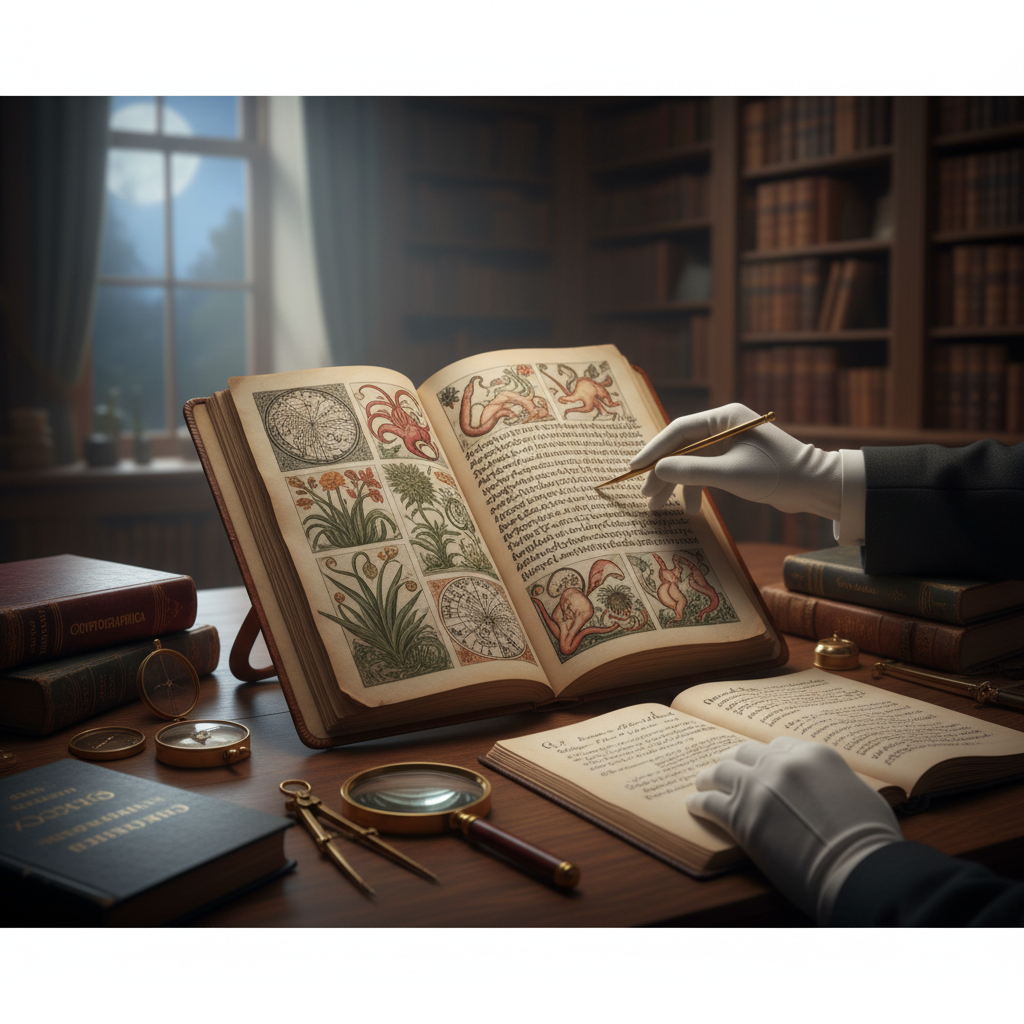
The Voynich Manuscript stands as a beacon of mystery in the world of historical texts. Bursting with vibrant illustrations and an unknown script, its origins and meaning have baffled historians, linguists, and cryptographers since it was discovered in 1912. This article embarks on a journey through its intricate pages, pondering the vexing questions of why this manuscript remains undecoded.
Discovered by Wilfrid Voynich, an antiquarian book dealer, this 15th-century document is written in a unique language that has resisted all attempts at translation. Initially, experts believed it could be a cipher or a constructed language, but the fact that no one has definitively cracked the code raises intriguing possibilities about its true nature.
Unraveling the Manuscript’s Content
The manuscript is divided into several sections: botanical, astronomical, biological, cosmological, pharmaceutical, and recipes. Each section is rich with illustrations that seem to depict unknown plants, celestial phenomena, and alchemical symbols. The vibrant depictions are captivating and perplexing; many of the plants have never been identified, leading to speculation about either their fictional nature or their existence in an unknown ecosystem. Furthermore, scholars have noted that some illustrations share similarities with medieval herbal texts, while others defy classification altogether, baffling botanists.
The botanical illustrations are particularly fascinating. For instance, while some experts have attempted to match them with known species, many argue that they are a product of pure imagination. This artistic liberty adds another layer of enigma. Are we looking at a real-world collection of herbology, or are these simply whimsical creations? Notably, some images appear to contain detailed structures akin to actual botanical studies indicative of a profound understanding of plant anatomy and uses – even if the plants themselves remain unidentifiable.
The Challenge of Deciphering the Script
One of the most baffling aspects of the Voynich Manuscript is its language. Comprising around 170,000 characters, it employs a consistent structure, yet no phonetics or recognizable elements from known languages exist. Various experts have applied algorithms, graphed frequencies, and even involved computers to decode the text, with limited success. Recent advancements in computational linguistics have given rise to new techniques, such as deep learning models, which analyze the text patterns for possible linguistic roots or structures.
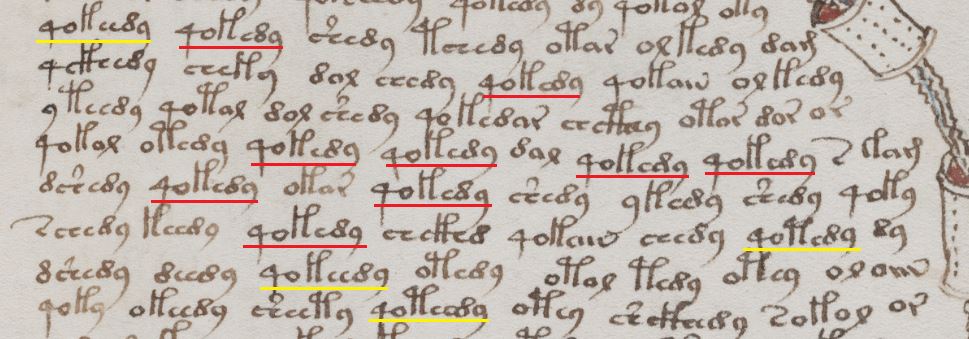
Image by Marcos Okseniuk
One notable attempt was made by a group of researchers from the University of Alberta who utilized machine learning to analyze word patterns. They suggested that this “language” might not represent any human speech at all but could be a sophisticated hoax or an artistic play. This assertion opens the door to a mesmerizing consideration: What if the manuscript is a deliberately constructed language, meant to confuse rather than communicate? The implementation of complex algorithms that try to find correlations between the Voynich text and known languages raises the question of whether the manuscript was intended as a conundrum rather than a genuine text.
The Historical Context
Understanding the historical context of the Voynich Manuscript is essential for grasping its significance. Believed to have originated in central Europe during the early 15th century, it connects to the time of burgeoning interest in alchemy, medicine, and the mystical arts. Such cultural movements leaned toward esoteric knowledge, potentially inspiring the manuscript’s creation as a compendium of secret wisdom. The era was rife with exploration, notably of the natural world, as scholars sought new herbal remedies and scientific insight. It is plausible that the manuscript served as a means of sharing this newfound curiosity while shrouding it in ambiguity.
The manuscript passed through several hands, including the infamous Habsburgs and even a famed botanist named Georg Tullius. Each owner might have added to its mystique or even sought to suppress its content, further obscuring its purpose and origin. The journey of the Voynich Manuscript through time emphasizes its significance, from a mere manuscript to a symbol of the human quest for understanding the arcane. The complex history showcases numerous societal and political contexts that may have influenced its creation and distribution.
Who Created the Voynich Manuscript?
Many have speculated about who might have created the Voynich Manuscript. One theory points to Roger Bacon, a 13th-century Franciscan friar and philosopher known for his work in natural sciences. Others suggest it could have been authored by John Dee, an English mathematician and occultist. While these ideas tantalize the imagination, they often lead to more questions than answers. The lack of concrete evidence tying any specific historical figure to the manuscript tends to fuel larger theories surrounding its potential hidden meanings.
Another popular hypothesis argues that the manuscript could be the work of an unknown genius – perhaps a monk desiring to conceal knowledge from the outside world. If this is true, it adds a layer of intrigue, hinting at a concealed lore waiting to be unveiled. The notion that the manuscript might hide sacred teachings only accessible to a chosen few enriches its narrative. This drives both fascination and frustration, as the key to understanding remains frustratingly out of reach for researchers.
Theories and Speculations
As excitement about the Voynich Manuscript persists, numerous theories have surfaced, each channeling curiosity and skepticism. One theory posits that it is a sophisticated hoax, crafted to imitate the look of genuine medieval texts without containing any real meaning. This notion aligns with the views of some historians who regard it as a kind of art piece rather than a practical tome. This perception positions the manuscript not merely within the context of text but as a cultural artifact reflecting the time’s complexities of authenticity and authorship.
Alternatively, there are those who suggest it might be a record of an alien civilization – a wildly imaginative leap, for sure! Supporters of this view point to the otherworldly illustrations as evidence of its extraterrestrial connection. Regardless of one’s belief in this premise, it undeniably adds to the manuscript’s allure. Such discussions often lead enthusiasts to bridge the gap between science fiction and historical inquiry in a search for an ultimate truth behind the manuscript’s purpose.
Modern Interest and Efforts
In recent years, academic interest in the Voynich Manuscript has surged. With the advent of technology, historians and cryptographers are employing sophisticated methods to unravel its secrets. The digital age has birthed initiatives where enthusiasts and experts converge online to tackle the manuscript collectively. Websites dedicated to crowdsourcing translations and analyses have sprung up, igniting excitement and cooperation. With platforms for shared knowledge and insights, anyone can join the effort, democratizing the skills of deciphering what remains hidden.
Moreover, organizations such as Yale University, which houses the manuscript, have taken efforts to digitize it and make it accessible for everyone. This widespread availability invites curious minds to join the quest for understanding – a symbol of the universal intrigue that the Voynich Manuscript elicits. By utilizing digital tools for image-enhancement and pattern recognition, researchers get fresh perspectives, allowing for innovative interpretations that defy previous frameworks.
Why the Mystery Endures
The baffling nature of the Voynich Manuscript captivates people on many levels. It embodies humanity’s quest for knowledge and understanding – pushing the boundaries of what is conceivable. Each untranslatable word feels like a locked door, whispering secrets of a long-forgotten world. When you approach the manuscript, you’re not just encountering a piece of paper; you’re engaging with an enduring puzzle, calling you to think critically about cultural knowledge and human curiosity. The vibrant imagery invites viewers to draw their own interpretations, creating a sense of personal connection to the artifact.
This allure lies not merely in its content but in what the mystery reveals about our desire to understand the unknown. Whether you’re a historian, a linguist, or simply a curious reader, the questions raised by the Voynich Manuscript invite contemplation and spark dialogue about the nature of mystery itself. If you’re interested in other historical enigmas, consider exploring unsolved ancient artifacts that also baffle the mind. Other artifacts, like the Antikythera mechanism or the Shroud of Turin, have similarly invited speculation, presenting both challenges and avenues for further investigation.
Engage with the Mystery
If the Voynich Manuscript intrigues you, why not get involved? Many online forums and communities welcome amateur cryptographers and enthusiasts alike to engage with puzzling texts. You could partake in discussions, share insights, or even tackle translation challenges together. These platforms not only cultivate knowledge but also create a sense of community united by a shared quest for understanding. The collective endeavor reveals the dynamics of collaboration as participants navigate their experiences and perspectives to foster deeper exploration.
You might also find your own theories and ideas about the manuscript contributing to this ongoing dialogue. Each input helps to keep the intrigue alive, turning it from a solitary study into an interactive exploration. Such collaborative endeavors are reminiscent of the spirit behind many historic codes and secrets – a communal pursuit of enlightenment that stretches across time, uniting a diverse array of minds through their shared experiences with the text.
Pondering the Unknown
The Voynich Manuscript serves as an invitation to question, to ponder, and to unlock the mysteries that the world presents. It urges you to think critically about history, language, and creativity – blurring the lines between art and linguistics. The manuscript may remain unreadable, but it undeniably embodies the beauty of enigma – a reminder that some mysteries are best savored in their unresolvable complexity. The allure of such unfathomable narratives fosters a culture rich in inquiry and debate, providing fertile ground for future research.
To wrap up, the ongoing intrigue surrounding the Voynich Manuscript demonstrates that the pursuit of understanding is as rewarding as the answers it may yield. Each mystery propels us forward, encouraging exploration and inquiry. So, as you delve into this perplexing artifact, remember: The journey through the unknown is, itself, a treasure worth seeking.


